
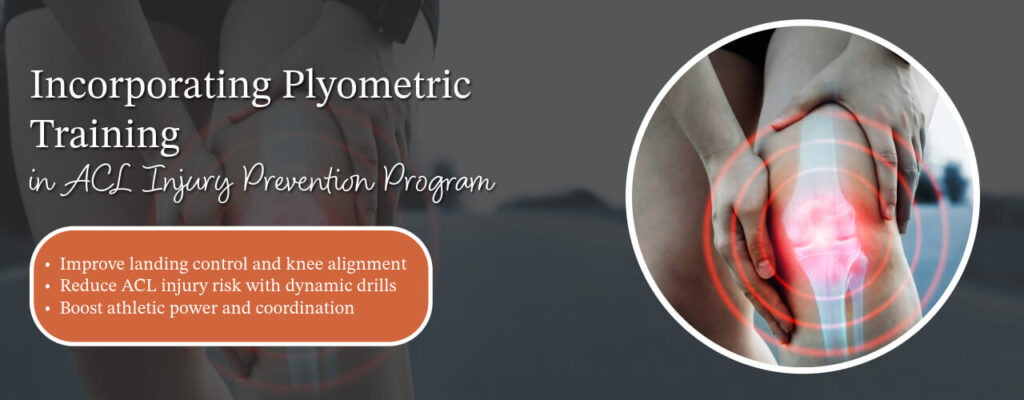
Incorporating Plyometric Training in ACL Injury Prevention Programs
Jumping, landing, and changing direction are high-demand movements that place stress on the knees, especially the anterior cruciate ligament (ACL). While these motions are critical in sports, they also carry a high risk of injury if not performed with proper control. One proven approach to reducing this risk is plyometric training for ACL injury prevention, which focuses on teaching the body how to absorb force safely and respond to explosive movement.
At Rehab Partners, our physical therapists integrate plyometric techniques into ACL prevention plans to help athletes and active individuals reduce injury risk and improve athletic performance. Below is a step-by-step guide to incorporating plyometric training in a way that is effective, evidence-based, and safe.
Steps to Plyometric Training
Step 1: Build a Strong Foundation First
Before introducing plyometric drills, it’s important to ensure the lower body has sufficient strength and control. Plyometrics place a significant load on the knees and hips, so athletes must have adequate neuromuscular readiness.
What to focus on:
- Strengthening quads, hamstrings, and glutes
- Practicing basic squats and lunges with proper form
- Developing single-leg balance and postural stability
Without this foundation, the risk of injury from advanced movements increases. At Rehab Partners, we assess readiness before progressing to impact-based exercises.
Step 2: Start with Low-Impact Plyometrics
Early-stage plyometric drills should involve minimal ground reaction forces while reinforcing correct landing mechanics. The goal is to develop muscle reactivity and coordination without overwhelming the joints.
Examples of low-impact progressions:
- Double-leg hops in place
- Lateral line jumps
- Jumping onto a low step with controlled landings
Coaching cues are critical here. Emphasize soft landings, knees tracking over toes, and landing with hips and knees slightly bent.
Step 3: Progress to Single-Leg and Multi-Directional Movements
Once basic drills are performed with control, athletes can begin more dynamic tasks that simulate real-sport conditions. Single-leg landings and lateral motions are key elements in plyometric training for ACL injury prevention because many ACL injuries occur during cutting or unbalanced landings.
Target movements include:
- Single-leg hops forward and sideways
- Skater jumps with a stick-and-hold landing
- Bounding drills with attention to alignment
The goal is to challenge knee control under more complex scenarios while reinforcing quick adjustments and proper alignment.
Step 4: Train Deceleration and Absorption
Learning how to stop movement is just as important as starting it. Deceleration training focuses on landing softly, using muscles to absorb force instead of relying on joints.
Key techniques to teach:
- Stick landings: jump, land, and hold for 2-3 seconds
- Depth drops: step off a box and land quietly
- Emphasize knees aligned, hips back, and chest up on landing
This step develops eccentric strength and coordination, helping athletes avoid the risky valgus knee collapse that’s often associated with ACL injury.
Step 5: Integrate Plyometrics into Full Workouts
To maximize the effectiveness of plyometric training for ACL injury prevention, drills should be integrated into functional workouts rather than treated as isolated tasks. Athletes benefit from applying these skills within broader conditioning routines.
How to do it:
- Use plyometrics as part of a warm-up, agility session, or strength circuit
- Combine strength and plyometrics: e.g., squats followed by jump squats
- Monitor fatigue form should never be compromised
Sessions should be designed with intent and monitored for proper rest between sets to reduce injury risk and reinforce movement quality.
Step 6: Reassess and Progress Regularly
Like all physical training, plyometric development should evolve based on the athlete’s progress. Tracking movement quality and physical benchmarks helps determine when to increase intensity or add complexity.
Tips for effective progression:
- Increase jump height or distance only after perfect form is mastered
- Add external stimuli like reaction tasks or directional changes
- Gradually build volume while allowing full recovery between sessions
At Rehab Partners, we use periodic reassessments to make sure training is aligned with the athlete’s goals and recovery status.
Plyometric Training for ACL Injury Prevention Requires a Strategic Approach
Effective plyometric training for ACL injury prevention is not just about jumping higher or faster. It’s about teaching the body to move explosively while staying aligned, controlled, and responsive. This requires a plan tailored to the individual’s strength level, sport, and movement needs.
Our physical therapists at Rehab Partners combine strength, coordination, and functional movement training into customized programs that are challenging, progressive, and grounded in research-supported methods.
Build Power and Protect Your Knees
Incorporating plyometrics into your injury prevention plan is one of the smartest ways to build durability and enhance performance. With the right guidance, you can develop the tools to move with power and confidence without sacrificing safety.
Contact Rehab Partners today to schedule a movement evaluation and get started with a program that includes structured plyometric training for ACL injury prevention tailored to your sport, goals, and ability level.